The Most Common Office Layout Mistakes and How to Fix Them
Office relocations and refurbishments are often high‑pressure projects.
Budgets are tight, programmes are fixed, and expectations are high. Yet despite significant investment, many offices fail to deliver the performance improvements they were designed to achieve.
At Shropshire Studios, we regularly see businesses spend heavily on new workplaces — only to find productivity unchanged, engagement flat and frustration rising.
The reason is rarely aesthetic.
It’s layout.
Here are the most common office layout mistakes we see — and how to avoid them.

Mistake One: Overcrowding the Workplace
Trying to fit too many people into too little space is one of the most damaging layout decisions a business can make.
Overcrowded offices lead to:
Discomfort and fatigue
Increased noise and distraction
Reduced concentration
Higher stress levels
While desk density may reduce short‑term costs, the long‑term impact on wellbeing, productivity and retention quickly outweighs any savings.
How to fix it:
Start by understanding realistic occupancy — not just headcount. Hybrid patterns, peak days and team behaviors all matter. Space should be planned to support comfort, circulation and privacy, not just maximum capacity. Optimised layouts focus on quality of space, not quantity of desks.
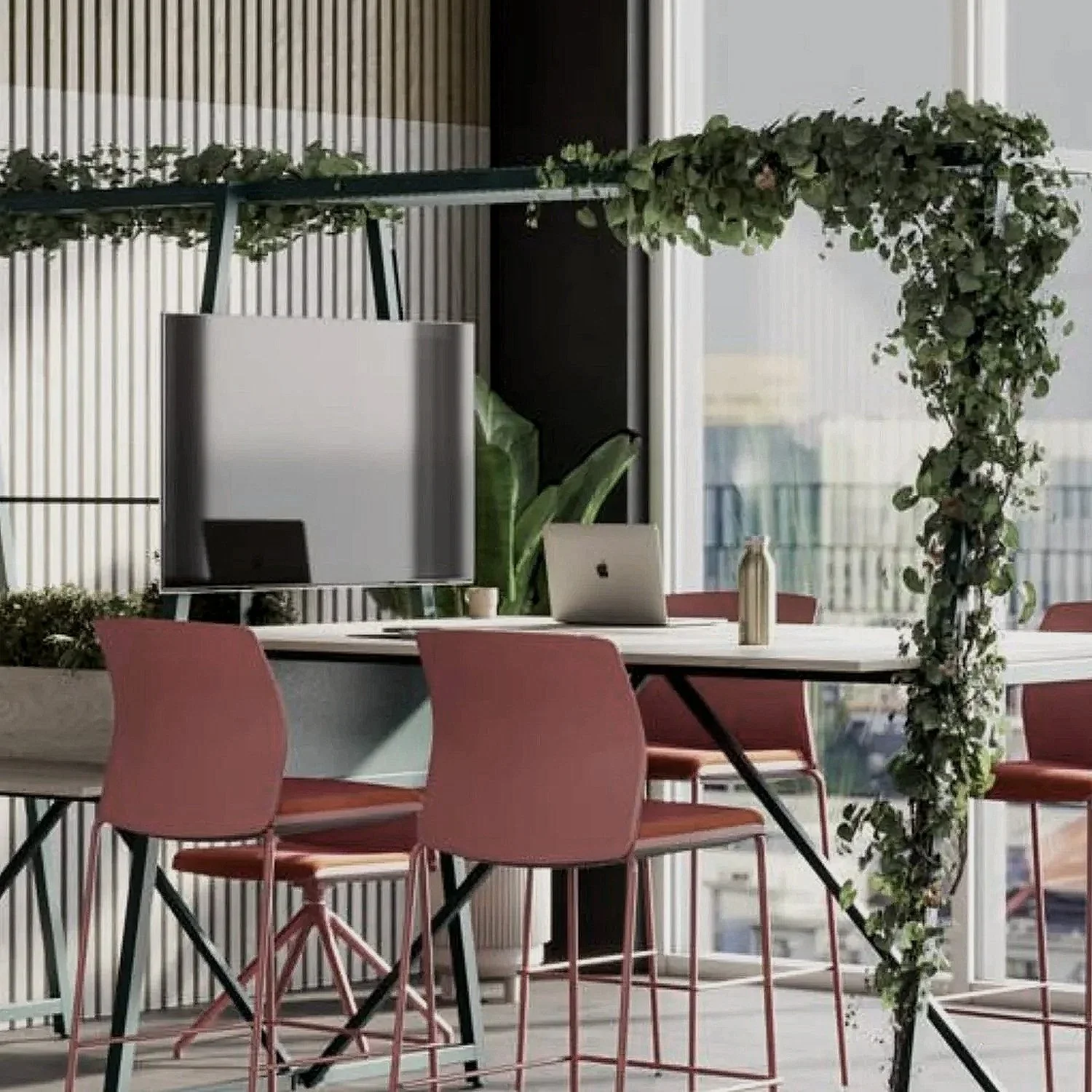
Mistake Two: Neglecting Collaboration Space
In many offices, desks dominate the layout while collaboration becomes an afterthought.
This approach ignores how people actually use the workplace today.
In a hybrid environment especially, the office exists primarily for:
Collaboration
Learning
Team connection
Culture
Without well‑designed collaboration zones, interaction becomes forced, inefficient or avoided entirely.
How to fix it:
Designing collaboration intentionally means providing a balanced mix of formal meeting rooms, informal breakout spaces, project areas and touchdown zones. The most effective workplaces are shaped around how teams actually work together, with layouts that naturally support interaction, focus and flexibility — rather than forcing behaviour into rigid settings.

Mistake Three: Ignoring Acoustics
Noise remains the number one complaint in open‑plan offices.
Layouts that prioritise visual openness without acoustic strategy often create environments where:
Focus becomes difficult
Meetings spill noise into work zones
Stress levels rise
Productivity falls
Acoustics should never be treated as a finishing touch.
How to fix it:
Acoustic planning should begin at the layout stage, not as a finishing detail. Successful offices clearly separate noisy and quiet zones, provide enclosed focus and call spaces, integrate acoustic finishes into ceilings, walls and furniture, and manage circulation routes carefully. When people can concentrate comfortably, performance improves immediately.

Mistake Four: Failing to Future‑Proof
Many layouts are designed purely for today’s needs — ignoring how organisations change.
Over the life of a typical lease, businesses often experience:
Growth or contraction
New team structures
Hybrid working evolution
Technology shifts
Rigid layouts quickly become obsolete.
How to fix it:
Future‑proofing means designing for change from the outset. Successful workplaces use modular layouts, demountable partitions and flexible furniture systems that allow spaces to be easily reconfigured over time. When environments can adapt as teams grow and working patterns evolve, the workplace supports the business — rather than restricting it.

Mistake Five: Poor Use of Natural Light
Natural light is one of the most valuable assets in any workplace — yet it’s frequently misallocated.
Common mistakes include:
Private offices blocking window lines
Meeting rooms occupying prime daylight zones
Work areas pushed into darker floorplates
This reduces comfort, energy and wellbeing across the space.
How to fix it:
Natural light should be prioritised in the areas used most frequently, including workspaces, collaboration zones and breakout spaces. Artificial lighting can then be layered to support areas with limited daylight, creating a consistent and comfortable environment throughout the workplace. When daylight is used effectively, energy levels, wellbeing and overall performance improve naturally.

Mistake Six: Designing Without Employee Input
Layouts designed without understanding how people actually work rarely succeed.
When staff feel ignored during design:
Adoption suffers
Resistance increases
Engagement drops
Change becomes disruptive
Assumptions are rarely accurate.
How to fix it:
Involving people early and meaningfully leads to better design outcomes. Surveys, workshops and observations help uncover real behaviours, frustrations and working patterns that might otherwise be missed. When layouts are shaped by genuine insight rather than assumptions or generic “best practice”, workplaces perform better, adapt more easily and are far more likely to be embraced by the people using them every day.
Avoiding Layout Mistakes Is About Strategy, Not Style
Office layout isn’t about trends or aesthetics. It’s about performance.
The most successful workplaces are those that:
Support how people actually work
Balance collaboration with focus
Prioritise comfort and wellbeing
Adapt over time
Reflect culture and values
When layout decisions are made strategically, the workplace becomes a genuine business asset — not just a necessary expense.
The Bottom Line
Great offices don’t happen by chance.
They’re the result of thoughtful planning, behavioural insight and design decisions made with long‑term performance in mind. Avoiding common layout mistakes doesn’t just improve how a space looks — it transforms how a business works.
At Shropshire Studios, we design workplaces that perform as well as they inspire — spaces built to support people, culture and growth.
Because when layout works properly, everything else follows.