Acoustic Requirements in Commercial Spaces
Walk into a space and you’ll notice it immediately — even if you can’t explain why.
It might feel calm and focused.
Or loud, distracting and slightly uncomfortable.
More often than not, that feeling comes down to acoustics.
In commercial environments, sound isn’t just a background condition. It shapes how people work, interact and experience a space. And yet, it’s one of the most overlooked elements in design.
At Shropshire Studios, we see acoustics not as an afterthought, but as a fundamental part of how a space performs.
Here’s what that really means.
Why Acoustics Matter More Than You Think
In a commercial setting, poor acoustics show up quickly.
Conversations become difficult
Background noise builds and lingers
Focus drops
Fatigue increases
In offices, this affects productivity.
In restaurants and bars, it affects atmosphere and dwell time.
In retail, it influences how long people stay and how comfortable they feel.
Sound directly impacts behaviour — and ultimately, business performance.

It Starts With Understanding the Space
Every environment has different acoustic demands.
An open-plan office needs to support both collaboration and concentration.
A restaurant needs energy, but not overwhelming noise.
A reception area should feel calm and controlled, not echoing and chaotic.
There’s no one-size-fits-all solution.
Good acoustic design starts with asking the right questions:
How will the space be used?
How many people will occupy it?
What kind of noise will be generated?
Where are the quiet and active zones?
From there, the design begins to take shape.

Hard Surfaces Are the Problem
Modern commercial interiors often favour hard, minimal finishes — polished concrete, glass, metal, stone.
Visually, they work.
Acoustically, they don’t.
These materials reflect sound rather than absorb it, causing noise to bounce around the space and build over time.
The result is reverberation — that lingering echo that makes everything feel louder than it actually is.
Without intervention, even a well-designed space can quickly become uncomfortable.

Absorption Is Key
The goal of acoustic design isn’t to eliminate sound — it’s to control it.
This is where absorption comes in.
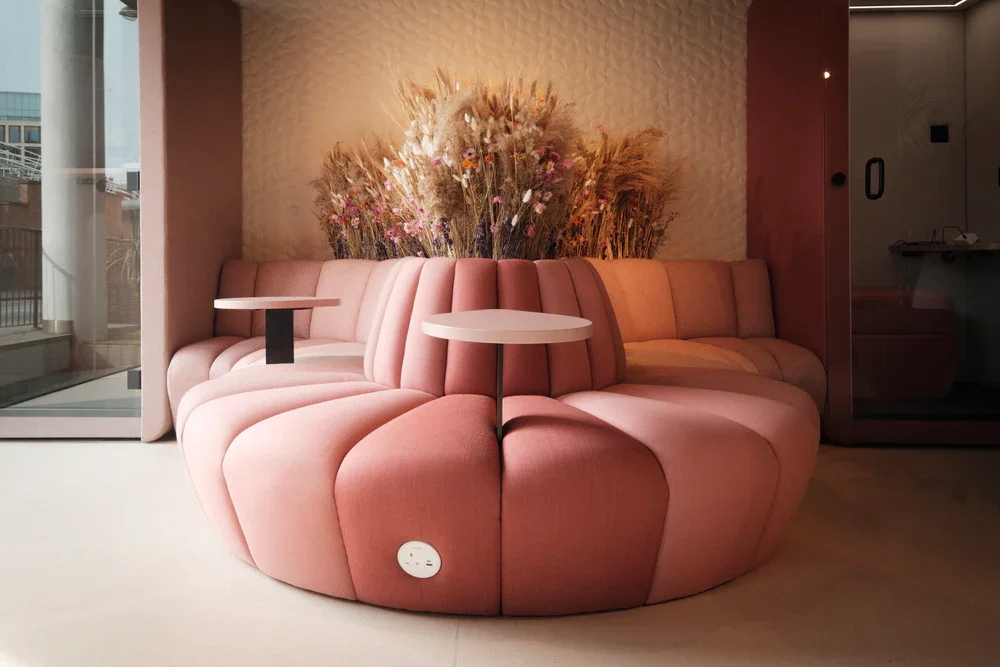
Soft, porous materials help to reduce reverberation by absorbing sound rather than reflecting it.
This can be introduced through:
Upholstered seating
Carpets and rugs
Acoustic wall panels
Ceiling baffles or rafts
Curtains and soft furnishings
The key is balance. Too little absorption, and the space is noisy. Too much, and it can feel flat and lifeless.

Ceilings Do More Than You Think
One of the most effective and often underused acoustic tools is the ceiling.
Because sound travels upward and reflects back down, treating the ceiling can dramatically improve how a space feels.
Acoustic ceiling solutions can include:
Suspended baffles
Perforated panels
Acoustic rafts
Fabric-wrapped systems
These don’t have to feel technical or intrusive. When designed well, they become part of the visual language of the space.
Zoning for Sound Control
Not every part of a commercial space needs to sound the same.
In f
act, it shouldn’t.
Zoning allows you to create variation:
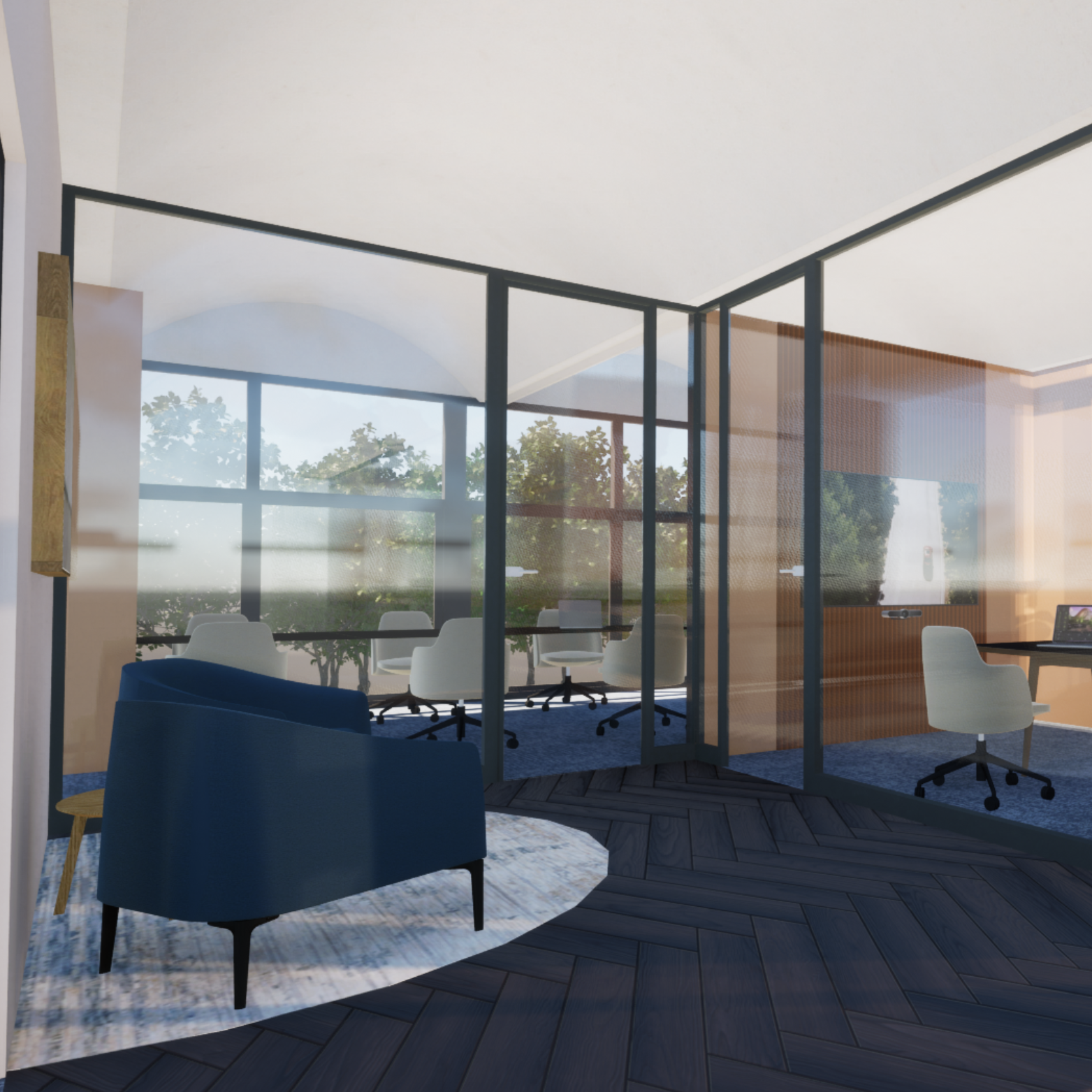
Quiet zones for focused work
Social areas for collaboration
Transitional spaces that buffer sound
This can be achieved through layout, material changes, and subtle spatial divisions.
It’s not just about adding acoustic materials — it’s about planning how sound moves through the space.
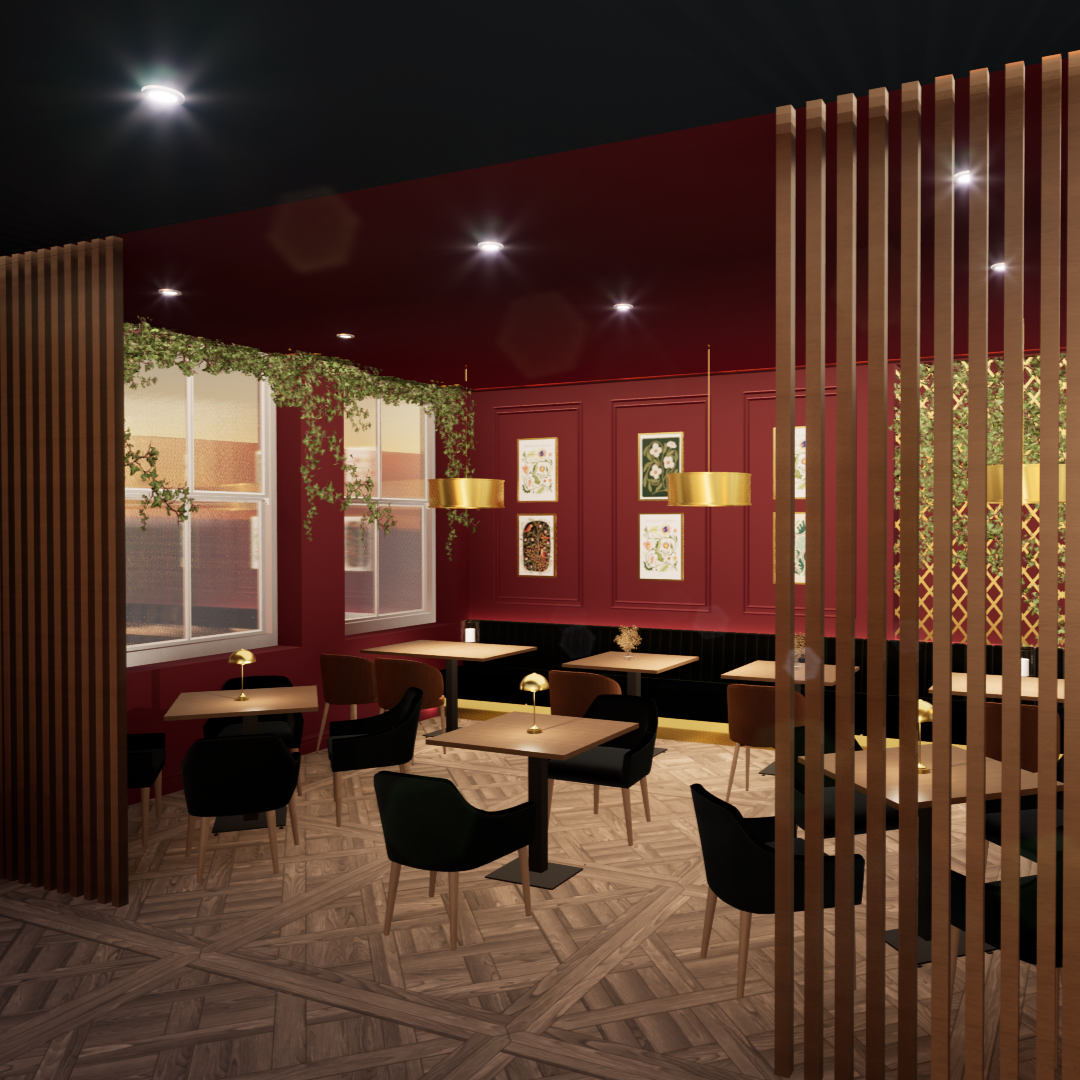
Acoustics in Hospitality Spaces
In restaurants and bars, acoustics are closely tied to atmosphere.
Too quiet, and the space lacks energy.
Too loud, and people leave sooner than they’d like.
The goal is a controlled buzz — a space that feels lively, but still allows conversation without effort.
This often involves:
Breaking up large reflective surfaces
Introducing layered materials
Using furniture and layout to diffuse sound
It’s a delicate balance, but when it’s right, it transforms the entire experience.
The Role of Design Integration
The biggest mistake with acoustics is treating it as a retrofit.
Panels get added late. Solutions feel disconnected. The design becomes compromised.
When considered from the beginning, acoustics integrate seamlessly:
Materials are selected with purpose
Features serve both aesthetic and functional roles
The space feels cohesive, not corrected
Good acoustic design shouldn’t be visible as a “fix” — it should feel like it was always part of the plan.

Performance Without Compromise
There’s a common assumption that acoustic solutions limit creativity.
In reality, they expand it.
From sculptural ceiling features to textured wall finishes, acoustic elements can enhance the visual identity of a space while improving how it performs.
It’s not about hiding function — it’s about designing with it.
Final Thoughts
Acoustics aren’t just technical.
They’re experiential.
They influence how people feel, how they behave, and how long they stay.
In commercial spaces, that matters.
At Shropshire Studios, we believe the best interiors don’t just look considered — they sound considered too.
Because when a space gets the acoustics right, everything else works better.