Fire Safety and Interior Design — What You Need to Know
Fire safety isn’t a box to tick at the end of a project.
It’s something that should shape the design from the very beginning.
Too often, it’s treated as a technical overlay, something handled by consultants once the “real design” is done. In reality, the best interior schemes are those where safety and design work together seamlessly, not in conflict.
At Shropshire Studios, we approach fire safety as part of the design language itself. Because when it’s done properly, it doesn’t compromise the space — it strengthens it.
Here’s what you actually need to know.
Fire Safety Is a Design Responsibility — Not Just a Compliance Exercise
UK Building Regulations , particularly Approved Document B, exist to protect people, property and emergency responders.
But importantly, responsibility doesn’t sit with one person.
Interior designers are just as accountable as architects, contractors and consultants. Every material, layout decision and specification has an impact on how a building performs in the event of a fire.
And that means fire safety isn’t something you can “hand over” — it has to be understood.
It Starts With Detection and Early Warning
Every building needs a reliable fire detection and alarm system.
This isn’t just about installing alarms — it’s about how they integrate into the space.
Systems must be mains powered with backup
Detectors should be positioned within key circulation routes
Design must allow for clear coverage without visual clutter
In commercial environments, especially hospitality and workplaces, this becomes even more critical. High occupancy, varying layouts and ambient noise levels all influence how systems are designed.
Good design ensures safety without making the space feel clinical or over-engineered.
Escape Routes Shape the Layout
If there’s one element that directly influences spatial planning, it’s escape.
Every layout decision — from furniture placement to corridor widths — must support safe, intuitive evacuation.

That means:
Clear, unobstructed routes to final exits
Travel distances kept within regulated limits
Protected stairways where required
Logical flow that people can understand instinctively
This is where design and psychology overlap. In an emergency, people don’t read signage, they follow instinct.
A well-designed layout guides them without thinking.
In commercial spaces, particularly restaurants, offices and mixed-use developments, poor planning here is one of the most common and most serious mistakes.
Containing Fire Is Just As Important As Escaping It
Fire safety isn’t only about getting people out. It’s about slowing the spread.
This is where materials, construction and detailing come in.
Walls, floors and ceilings must meet fire resistance ratings
Compartmentation prevents fire moving between spaces
Cavity barriers stop hidden spread through voids
Fire dampers control movement through ventilation systems
From a design perspective, this influences everything from partition types to ceiling build-ups.
The best schemes integrate these requirements early, rather than retrofitting them later — which is where cost and compromise usually creep in.
Doors: Small Detail, Big Impact
Fire doors are one of the most underestimated elements in interior design.
They’re not just functional — they’re critical to both escape and containment.
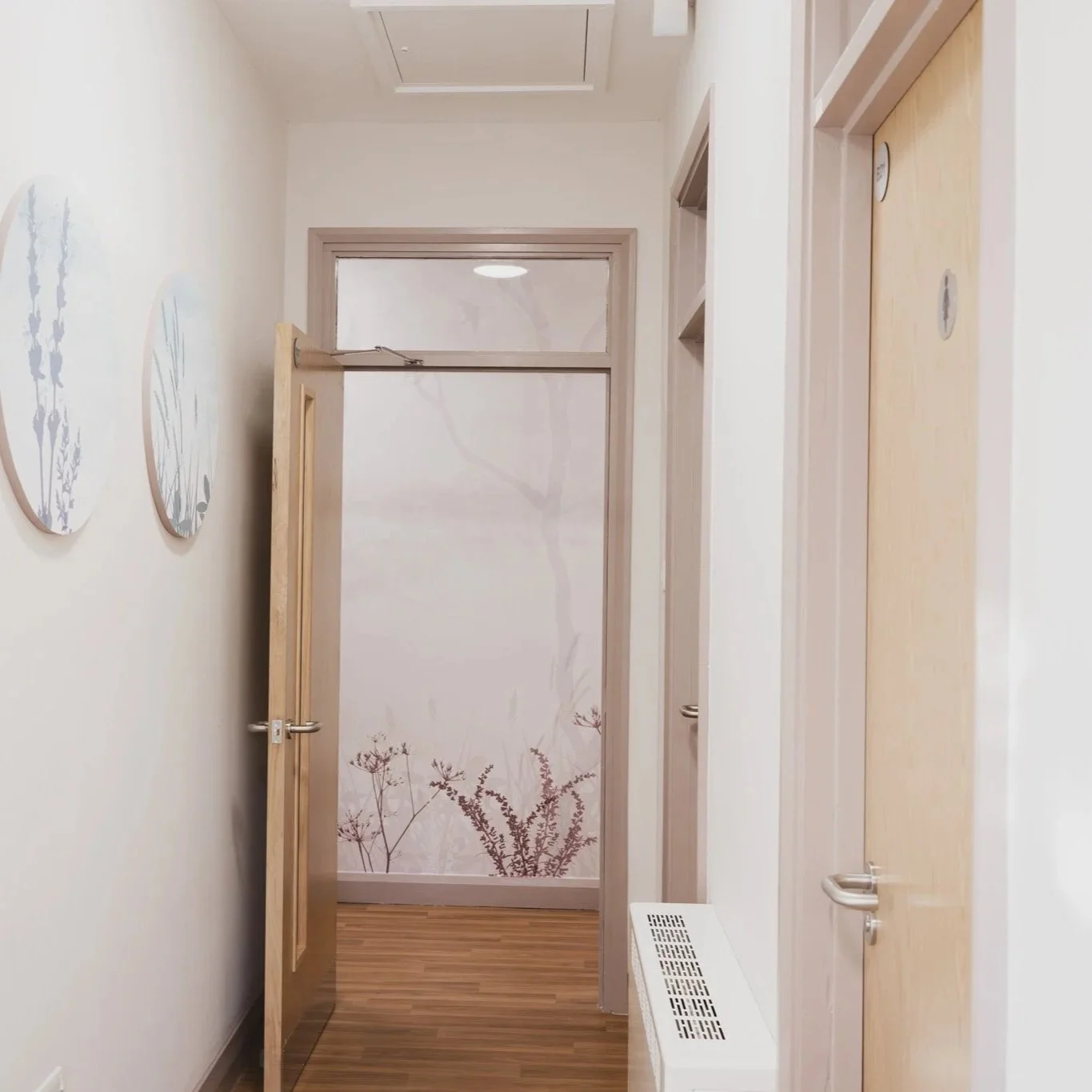
Key considerations include:
Fire resistance ratings appropriate to the space
Self-closing mechanisms
Direction of opening (in line with escape routes)
Easy, keyless operation in emergencies
In commercial settings, doors often need to balance compliance with aesthetics. That might mean integrating fire-rated glazing, concealed closers, or bespoke finishes that align with the overall scheme.
Done properly, they disappear into the design. Done poorly, they dominate it.
Lighting and Signage: Guiding People Under Pressure
In an emergency, visibility changes everything.
Escape lighting must activate instantly if mains power fails, illuminating:
Corridors and escape routes
Staircases
Plant rooms and key service areas
Signage also plays a critical role, but only when it’s clear, legible and positioned correctly.
This isn’t just about compliance. It’s about clarity under stress.
In well-designed spaces, lighting and signage feel integrated, not added on — subtle in everyday use, but highly effective when needed.
Materials Matter More Than You Think
Every finish you specify contributes to how a fire behaves.

In circulation spaces especially, materials must:
Limit surface spread of flame
Reduce heat release
Minimise smoke production
This affects wall linings, ceilings, upholstery, and even decorative elements.
It doesn’t mean design has to be restrictive — it means being intentional.
There are always compliant options that still deliver on aesthetic.
Sprinklers, Access and Fire Service Considerations
Beyond the internal environment, design must also support firefighting operations.
This includes:
Access for emergency vehicles
Fire mains and equipment
Firefighting shafts and protected routes
In some cases, sprinkler systems
In larger or commercial buildings, these requirements become more complex — and more influential on the design.
Again, early coordination is key.
The Balance Between Safety and Design
The biggest misconception about fire safety is that it limits creativity.
In reality, it demands better design.
When fire safety is considered from day one:
Layouts are clearer
Materials are more considered
Spaces function better under pressure
Compliance becomes seamless, not forced
When it’s left too late, it creates compromise, cost and disruption.
Final Thoughts
Fire safety isn’t just about regulation.
It’s about responsibility.
As designers, we shape how people move, behave and experience a space — including in moments that matter most.
At Shropshire Studios, we believe the best interiors don’t just look good and perform well day-to-day. They’re designed to protect the people using them, without ever making that feel like a constraint.
Because good design doesn’t fight regulation.
It works with it — intelligently, seamlessly, and from the start.